

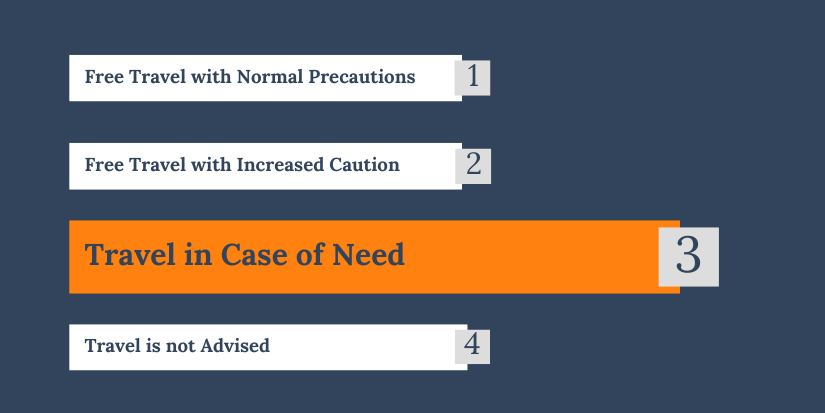
VISA REGIME
For holders of national passports and other travel documents: Visa required
For holders of diplomatic and official passports: Visa required
Note: Visa is required for the holder of an emergency travel document in transit
ENTERING AND LEAVING THE COUNTRY
Citizens of the Republic of Serbia need a visa to enter Uganda. Visas can be obtained through the Ugandan Embassy in Rome, Italy (tel. 00 39 06 32 25 220, fax: 00 39 06 32 13 688, website: http://www.embassyofuganda.it/en/, e-mail: info@embassyofuganda.it) or via this website https://visas.immigration.go.ug/.
Tourist, transit and diplomatic visas with multiple entries are approved through the website. Multiple-entry/exit visas are issued only in Uganda, regardless of the purpose of visit (private or business), and the rest are issued at the abroad diplomatic and consular missions of Uganda. For more information, please contact the Embassy of Uganda in Rome, Italy (see above). A single-entry/exit visa for Uganda costs 50 US dollars, a 6-month visa with multiple entries costs 100 US dollars, and a year visa with multiple entries costs 200 US dollars. To obtain a visa, it is necessary to have the yellow card of the World Health Organization (yellow fever vaccine). For tourist travel, the remaining validity of the passport must be at least 1 (one) month. For the purpose of regulating one’s stay (residence) in Uganda, the remaining passport validity must be at least 3 (three) months.
SOCIAL SECURITY AGREEMENT
No social security agreement has been concluded.
USEFUL INFORMATION
HEALTH SITUATION — The World Health Organization officially announced on May 17, 2026, that two cases of Ebola caused by the Bundibugyo virus had been recorded in Uganda (Kampala), and the health situation in Uganda was classified as a “Public Health Emergency of International Concern.”
It is recommended to take additional precautions when traveling to and staying in Uganda, especially in the capital, Kampala, and in the border areas with the Democratic Republic of the Congo.
Before traveling, we advise checking the current health situation on the website of the World Health Organization Regional Office for Africa: WHO Regional Office for Africa, as well as on the World Health Organization website.
In addition to yellow fever, there is a risk of malaria in lower-altitude areas, as well as the danger of insect and reptile bites, jaundice, hepatitis, cholera, amoebas, waterborne parasites, etc. People who are not accustomed to high altitudes may also experience altitude sickness.
Only bottled water should be used for drinking.
SECURITY SITUATION — In the capital city of Kampala, the security situation is stable and without major risks. There is a potential danger of theft, pickpocketing, fraud, and other minor crimes. Travel to the northern part of the country is not recommended because of the activities of rebel groups.
TRANSPORT — The main international airport ‘Entebbe’ is located in the capital city of Kampala. A narrow-gauge railway connects Kampala with the Kenyan border. The road network is poorly developed, and the use of off-road vehicles is recommended. Motor traffic is on the left-hand side, and cars can be rented from larger car rental companies.
OTHER INFORMATION — Travel to Uganda through travel agencies is recommended, while individual travel should be more thoroughly prepared and informed.
In Uganda, in addition to local languages, English is the most widely used language.
The national currency of Uganda is the Ugandan Shilling (UGX). It will be possible to use international payment cards (VISA, etc.), especially in good hotels, restaurants, supermarkets, etc. Only newer US dollar bills can be exchanged.
Contact information:
For consular assistance and protection while in Uganda, please contact the Embassy of the Republic of Serbia in Nairobi (address: 6th Floor, Fortis Tower, Wood Vale Grove, Westlands, Nairobi), via the following phone numbers: +254794588515; +254723163775; (for Serbian citizens in emergencies only: +254734601031) and email: srb.consular.kenya@mfa.rs.